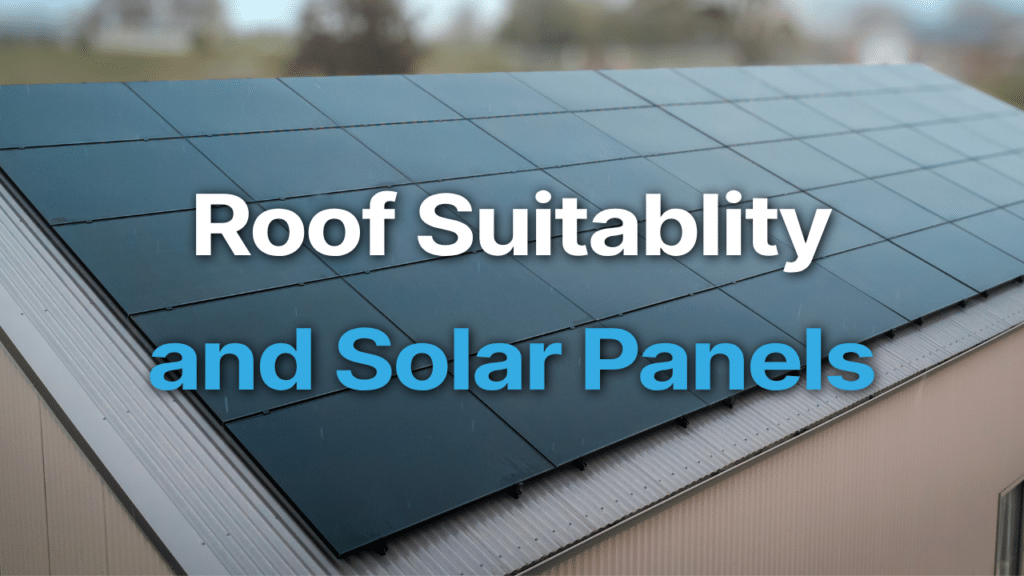
Have you ever wondered if your home is right for solar, or if it might be one of the few that isn’t?
It’s a good question. Solar panels seem to be everywhere these days. Maybe your neighbour has them, or your colleague talks about saving money on bills, and ads make it look like every roof in Australia is ideal for solar.
At PSC Energy, we check rooftops every day. The reality is, some homes are a better match than others, and a few just aren’t suitable.
This article covers the main reasons a home might not work for solar, what each issue means, and what you can do if things aren’t simple. By the end, you’ll know if your home is a good fit and what steps to take next.
Most homes can go solar. But some genuinely can’t.
Before looking at the challenges, it’s helpful to know what makes a home suitable for solar. Ideally, you want:
- A structurally sound roof with at least 10 to 15 years of life left in it.
- North-facing roof space with minimal shading.
- Enough usable area for the system size you need.
- No planning or heritage restrictions blocking installation.
If your home meets all four points, installing solar should be simple. If any are missing, you’ll need to investigate further.
If you’re interested in learning more about solar systems, you might want to check out our introductory article titled, New to Solar: Start Here.
Roof orientation: how much does it actually matter?
In Australia, north-facing roofs are best for solar because the sun moves across the northern sky, giving these panels the most sunlight all day. Still, roof orientation isn’t just a yes or no issue.
Here’s roughly how orientation affects your output compared to a north-facing array:
- North: 100% output (benchmark)
- North-east / North-west: 90–95%
- East / West: 75–85%
- South-east / South-west: 60–75%
- South: 55–65%
East and west-facing roofs are more common than you might think, especially on homes with a north-south ridgeline.
A split east-west setup, with panels on both sides, can work well. This arrangement produces power in the morning and afternoon, spreading your energy use through the day instead of just peaking at midday.
For people who aren’t home during the day, this can be more useful than a single midday peak from a north-facing roof.
South-facing roofs are more challenging. The output drops a lot, and often it just isn’t worth the cost. If your only usable roof space faces south, solar might not be a good investment, and a good installer should tell you that upfront.
If you’re interested in learning a bit more about how your roof will affect your installations, you might want to check out the following article titled, How Does Your Roof Affect Your Installation?
Shading: the biggest performance killer
Shading is the main reason a home underperforms after solar is installed, and it’s often misunderstood before installation. Even a bit of shade on one panel can lower the output of the whole system, depending on how it’s set up.
Sources of shading to look out for:
- Trees (especially deciduous trees that cast different shadows in summer vs winter).
- Neighbouring buildings or second storeys.
- Chimneys, skylights, vent pipes, and satellite dishes on your own roof.
- Overhead powerlines running across the roof.
The key question is not just “Is my roof shaded?” but also “When is it shaded, and for how long?” Morning shade from a neighbour’s house is much less of a problem than midday shade from a large tree to the north.
A proper shading assessment, using software that models the sun’s position throughout the year, will give you a clear answer.
Technology can help with shading. Microinverters and DC power optimisers let each panel work on its own, so shading on one panel doesn’t drag down the whole system.
With a traditional string inverter, one shaded panel lowers the output for all. If your roof has unavoidable shade, microinverters or optimisers are usually the best choice, but they do cost more, so check if the extra power is worth the price.
If you’re interested in learning a bit more about solar panel efficiencies, you might want to check out the following article titled, How Efficient Are Solar Panels? Shade, Heat, and Seasonal Considerations in NSW, Australia.
Roof condition and age: when the structure itself is the problem
Solar panels last 25 to 30 years. If your roof needs replacing in the next five to ten years, installing panels now can be a problem. You’d have to pay to remove them, replace the roof, and then put the panels back. That extra cost can wipe out years of savings.
Roof types that can complicate solar installation:
- Terracotta and concrete tiles: Heavy, and individual tiles must be lifted for mounting. If tiles are old, brittle, or poorly maintained, the installation process itself can cause damage.
- Corrugated iron and Colorbond: Generally straightforward, but older iron roofs with rust or fatigue may need repairs first.
- Slate: Difficult to work with and easy to crack. Most installers will inspect carefully before committing to a slate roof.
- Asbestos-containing materials: No solar can be installed on any roof with asbestos-cement sheeting until it is remediated. Full stop. This is a legal and safety requirement, not a preference.
If a trusted installer says your roof needs repairs first, take their advice seriously. They aren’t just trying to sell you more work—they’re protecting their warranty and your long-term results.
If you’re interested in learning a bit more about solar panel problems and solutions, you might want to check out the following article titled, 4 Common Solar Panel Problems (and How to Avoid Them).
Roof size and available space
A typical 6.6 kW solar system needs about 35 to 40 square metres of usable roof space. The important word is “usable.” Things like skylights, solar hot water systems, vents, and chimneys all take up space, and you also need safety clearances around the edges and ridges, as required by Australian Standards.
Homes where space can be a genuine issue:
- Terrace homes and narrow semi-detached houses with small roof planes.
- Homes with complex rooflines (multiple hips, valleys, and pitch changes).
- Homes where the only usable space is partly shaded.
High-efficiency panels are the main fix here. A 440 W panel gives you more power per square metre than a standard 370 W panel, so you can fit a bigger system into less space.
For example, Aiko’s Gen 3 ABC panels go over 550 W in a standard-size panel, so you get much more output without needing extra roof space.
Heritage listings, strata, and planning restrictions
This is something that often surprises people. Your roof might be perfect for solar, but planning rules can still stop you from installing it.
- Heritage-listed properties: If your home is heritage-listed or in a heritage conservation area, you may need council approval before installing solar. In some cases, panels visible from the street will be rejected outright. Rules vary a lot between councils and between state and local heritage listings, so always check before you start.
- Strata properties: Apartment owners need approval from the owner’s corporation before installing anything on common property, which includes the roof. Some strata schemes have a blanket policy against solar; others are open to it. The NSW government has made it easier for strata owners to get solar approved, but it still requires going through a formal process.
- Easements and covenants: Some property titles include easements or restrictive covenants that can affect what you’re allowed to install. A conveyancer or solicitor can pull these up from your title if you’re unsure.
If you’re interested in learning a bit more about working with a solar installer, you might want to check out the following article titled, Top Questions to Ask Your Solar Installer Before Hiring Them.
When “not suitable” actually means “not yet”
Many homes that are written off as unsuitable can actually be fixed; they just need a different approach. Here’s what can make the difference:
- Microinverters (e.g. Enphase): Each panel operates independently. Shading and orientation issues are dramatically reduced because no single panel holds back the rest.
- DC power optimisers (e.g. SolarEdge): Work similarly to microinverters in their effect on shading but process DC power at the panel level before sending it to a central inverter.
- East/west split arrays: Instead of trying to force a north-facing solution, work with the roof you have. A well-designed split array often delivers better self-consumption than a single north-facing string.
- Waiting for a roof replacement: If your roof is about 15 years old and will need replacing soon, it’s usually best to plan the roof replacement and solar installation together. Replace the roof first or at the same time as the solar, so you don’t have to pay extra to remove and reinstall the panels later.
- High-efficiency panels on a smaller footprint: If space is your constraint, upgrade the panel technology rather than compromising on system size.
If you’re interested in learning a bit more about Enphase microinverters, you might want to check out the following article titled, Pros and Cons of Enphase Microinverter Solar Systems.
How to find out where your home stands
The only reliable way to know if your home is suitable is to get a proper site inspection. A satellite image and a compass reading on a quote aren’t enough. A thorough check should include:
- A shading analysis using software (not just a visual inspection).
- A structural check on the roof, or a recommendation to get one.
- A review of your energy bills to right-size the system.
- Confirmation of any planning or strata restrictions before design begins
Wrapping Up: The Bright Side and When There Isn’t One
Not every home is suitable for solar — and that’s okay. Roof orientation, shading, structural condition, available space, and planning restrictions can all limit what’s possible. But a limitation isn’t always a dead end.
Most problems have a solution; some just need a different approach, better technology, or a bit of timing. If you’re unsure where your home stands, the best thing you can do is get a proper assessment from an installer who will give you an honest answer, not just a sale.
PSC Energy assesses homes across Western Sydney every day. If you want to know the truth about your roof, we’re the right people to ask.
If you’re interested in learning a bit more about weighing the cost of solar against the cost of the grid, you might want to check out the following article titled, Cost of Solar Panels vs. Cost of Energy from the Grid.
FAQ: Is my home suitable for solar?
Is my home suitable for solar if it faces east or west?
Likely yes. East and west-facing roofs produce 75 to 85 per cent of the output a north-facing roof delivers. A split east-west array can work well, particularly for households that use power in the morning and evening rather than midday.
Does shading make a home unsuitable for solar?
Not automatically. Shading does reduce output, and heavy shading across the main roof is a serious problem. But partial or seasonal shading can often be managed with microinverters or power optimisers, which isolate shaded panels from the rest of the system.
Can solar be installed on an old roof?
It depends on the condition. If the roof needs replacing in the next five to ten years, it is usually better to replace it sooner. Installing panels on a roof that then needs replacing is expensive because you have to pay to remove and reinstall the system as well as the roofing cost.
What if I have a heritage-listed home — can I still get solar?
Possibly, but you will need council or heritage authority approval. Rules vary by listing type and council. In some cases, panels are approved if they are not visible from the street; in others, they are rejected regardless of placement. Check with your local council before proceeding.
Does living in a strata building mean I can’t get solar?
Not necessarily. You need approval from the owners’ corporation, and some schemes are more open to it than others. NSW has streamlined the approval process, but it still requires a formal vote and strata consent. Speak to your strata manager as a first step.
How do I know if my home is actually suitable for solar?
Get a proper site inspection from a reputable installer. Satellite imagery and a quick quote are not enough. A thorough assessment covers shading analysis, roof condition, system sizing against your bills, and a check for any planning restrictions.