Updated on November 19, 2025
Electric cars are becoming more popular. As a result, reliable home chargers are a must. One top option is the Tesla car charger. But is it the best choice for you?
At PSC Energy, we understand how learning about new technology might be overwhelming. EVs and their complementary components are new and foreign to a lot of people. We pride ourselves on knowing the ins and outs of an electric lifestyle.
In this article, you will learn:
- What is the Tesla Wall Connector?
- Pros and Cons of the Tesla Car Charger
- Installation and Setup
- Cost and Value Analysis
- FAQ: Tesla Wall Connector
By the end of this article, you’ll have a complete understanding of whether a Tesla Wall Connector is for you.
What is a Tesla Car Charger?
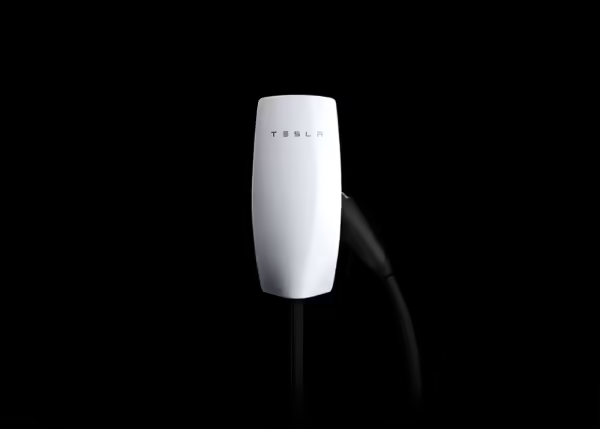
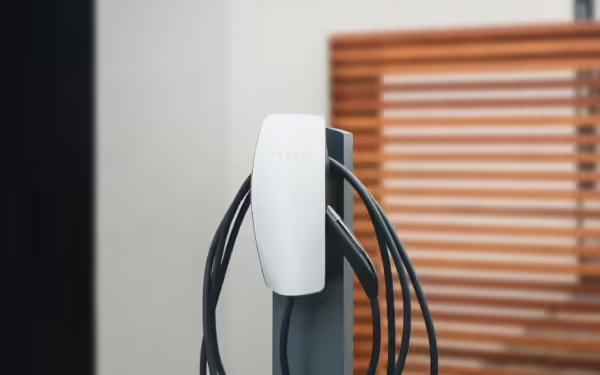
The Tesla car charger, also known as the Wall Connector, is a device that charges Tesla vehicles in the home. It’s a high-quality, efficient, and user-friendly option.
Key features and specifications:
- Rating: Compatible for single or three-phase setup.
- Charges up to 75 kilometres of range per hour.
- Wi-Fi connectivity for updates and monitoring.
- Can be installed indoors or outdoors depending on your needs.
- Compatible with Tesla Model S, Model X, Model 3, Model Y, and Cybertruck.
- Compatibility with Other EVs: Type 2 plug that works with all EVs.
- Dimensions: 345 x 155 x 110 mm
- Operating temperature: -30°C to 50°C
- Warranty: 4 years.
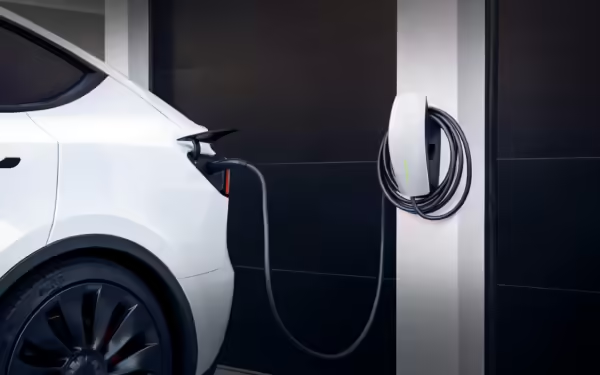
- Cable: 7.3 metres long.
If you’re interested in learning a bit more about how to set up and use the Tesla App, you might want to check out the following article titled, How to Set Up and Use the Tesla Powerwall App.
Pros and Cons of the Tesla Car Charger
Because the Tesla Wall Connector can be installed on both single-phase and three-phase sites, it’s a straightforward installation for almost every Australian home.
Pros:
Cost: about half as expensive as other chargers in its class.
Charge anytime: Because it’s installed at your home, you can charge your EV whenever you like.
Speed: It charges faster than many other home chargers. It can charge up to 75 kilometres per hour of charging if your home is a three-phase site. If your home is single-phase, it will be slower.
Integration: Works well with Tesla’s app for monitoring and scheduling if you’ve invested in the Tesla energy ecosystem with a Powerwall or Tesla solar panels.
Quality: Built to last with a sleek design.
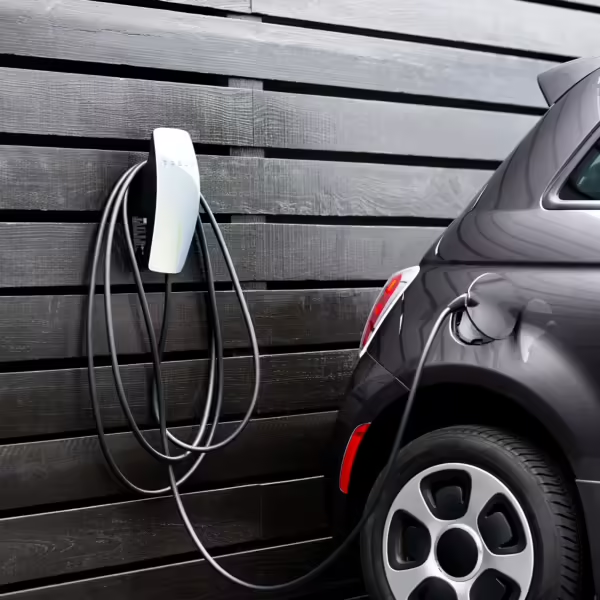
Compatibility: Universal plug Type 2 for all EVs (Tesla and non-Tesla) in Australia.
Cons:
Features: The only feature available for non-Powerwall owners is the ability to schedule your charging. That’s it. Features like Charge-From-Solar are only available if you have a Powerwall and have invested in a Tesla ecosystem for your energy.
Compatibility: While the plug works with all EVs, there is no smart charging through a 3rd party app using OCPP.
OCPP, or Open Charge Point Protocol, is a communication standard used in EV charging stations. It allows different EV chargers and EVs to communicate with each other, even if they are from different manufacturers.
This is why you can’t use the Tesla App for anything other than scheduling when to charge your EV if you don’t have a Powerwall.
If you’re interested in learning about one of the best benefits of the Tesla App, you might want to check out the following article titled, Guide to Tesla Charge on Solar in Australia – 2024.
Installation and Setup
Choose a location: Place it near where you park. It needs to reach your car easily. Keep the charger high enough to be convenient but not too low. An additional recommendation we have is to mount it near the outer garage door. A DIY project can take over your garage quickly and if you can’t park inside, your charger will need to reach where you park (like the driveway).
Installing the charger: Hire PSC Energy to handle the installation. We do that in addition to installing solar systems. We’ll connect the charger to your home Wi-Fi for updates.
If you’re interested in learning a bit more about the importance of a good installer, you might want to check out the following article titled, In-house Installers vs. Subcontractors: Which is Better?
Cost and Value Analysis
Breakdown of costs:
Installation and equipment costs are:
$1,800 for single-phase homes.
$2,250 for three-phase homes.
Long-term value and savings potential:
Using solar power will lower your energy costs. If you’re thinking of an EV, you should also be thinking about installing solar. And if you’re thinking about solar, you should be thinking about an EV.
If you’d like to learn more about Tesla products, we recommend you check out the following article titled, Tesla Powerwall 3 Review: An In-Depth Look at Tesla’s New Solar Battery.
Should I Buy a Tesla EV Charger?
If you have a Tesla EV or a Powerwall, this is a no-brainer. It’s half as much as other home chargers in its class. All the charging features are available through the Tesla App.
The Tesla Wall Connector looks so cool, and it can be colour-matched to your vehicle. If you value aesthetics and simplicity, this is the charger for you.
If you don’t own a Tesla EV or Powerwall, you won’t have a lot of options when it comes to charging features. As we mentioned, it’s only able to schedule charging and that’s about it.
If it had OCPP, you might be able to work around that, but the Wall Connector doesn’t have that either. It’s just a huge connector for non-Tesla owners, but it honestly doesn’t need to be much more than that if you don’t have a solar system.
If you’re interested in learning about other EV charger options, you might want to check out the following article titled, Zappi Charger Review: Is It the Right Choice for You?
Wire Wouldn’t a Tesla Owner Buy a Wall Connector?
The Tesla car charger offers many benefits. It’s fast, reliable, and integrates well with Tesla’s app and solar power. It’s also the most economical option. If you own a Tesla, it’s a great choice. If you’re looking to save money and don’t need all the features, it’s also a great choice.
At PSC Energy, we install the Tesla Wall Connector as well as the MyEnergi Zappi wall charger. We’re focused on setting customers up for an evolving energy lifestyle. The future is electric, and we’re here to help you reach it.
If you’re interested in learning a bit more about public charging stations, you might want to check out the following article titled, Electric Vehicle (EV) Charging Guide 2024.
FAQ: Tesla Wall Connector
What is the Tesla Wall Connector home charger?
The Tesla Wall Connector is a home EV charger that mounts on your wall and charges your car while it is parked. It is the main home charger Tesla recommends for Tesla vehicles. It also works with most other electric cars in Australia.
The Wall Connector uses a Type 2 plug. This plug is the standard for EVs in Australia, so it fits Tesla models and most non-Tesla EVs. It is a fixed unit with a 7.3 metre cable, so you do not need to move a portable charger in and out of the car.
The charger connects to your home’s power supply and to your Wi-Fi. This lets it receive software updates and talk to the Tesla app for monitoring and control.
How does the Tesla Wall Connector work?
The Wall Connector sends AC power from your home to your EV. Your car’s onboard charger then turns that AC power into DC to fill the battery. You plug in, set any charging schedule in the app, and the system does the rest.
You can:
- Plug in when you get home and let the car charge straight away
- Tell it to charge later when power is cheaper
- Use solar energy if you have panels and a suitable setup
You control these choices through the Tesla app if you own a Tesla vehicle. If you also have a Tesla Powerwall or Tesla solar, the app links all of it into one energy system.
Which cars are compatible with the Tesla charger in Australia?
The Tesla Wall Connector is built for all current Tesla models:
- Tesla Model 3
- Tesla Model Y
- Tesla Model S
- Tesla Model X
- Tesla Cybertruck (when available in Australia)
It also works with most non-Tesla EVs that use a Type 2 AC charging port. This includes many common brands sold in Australia.
You may need an adapter for some older or niche models, but most owners can plug straight in. If your EV has a Type 2 AC port, it will almost always work with the Tesla Wall Connector for everyday home charging.
How fast does a Tesla Wall Connector charge an electric car?
On a well set up three-phase home supply, the Tesla Wall Connector can add up to about 75 kilometres of driving range per hour of charging. This suits most daily driving needs very well.
On a single-phase site, the charger still works, but it charges more slowly because the home has less available power. You will still wake up with a full battery in most cases if you plug in overnight.
Your exact charging speed depends on:
- Whether your home has single-phase or three-phase power
- How your electrician sets the charger’s current limit
- The maximum AC charge rate your car’s onboard charger supports
Can the Tesla Wall Connector run on both single-phase and three-phase power?
Yes. The Tesla Wall Connector works on both single-phase and three-phase power in Australia.
- On single-phase sites, your installer wires it to one phase and sets an appropriate current limit.
- On three-phase sites, your installer can use the extra phases to unlock higher charge speeds, up to the 75 kilometres per hour range stated by Tesla.
This flexibility makes it suitable for most Australian homes. Your installer will match the setup to your switchboard and local wiring rules.
How much does a Tesla EV charger and installation cost?
Based on the article, you can expect:
- Around $1,800 for a single-phase home (supply and install)
- Around $2,250 for a three-phase home (supply and install)
This covers the Wall Connector hardware and a standard installation by a licensed electrician. Extra work may cost more. Examples include long cable runs, switchboard upgrades, or complex mounting locations.
Even with these costs, the Tesla charger often comes in at about half the price of other “smart” wall chargers in the same class.
Is the Tesla Wall Connector worth it for Tesla owners?
For Tesla owners, the Wall Connector is usually a very good choice. It is one of the least expensive branded home chargers in its class, and it integrates cleanly with the Tesla app and Tesla ecosystem.
You get:
- Fast charging, especially on three-phase
- A neat, purpose-built unit that matches the car
- Tight integration with Tesla software for scheduling and monitoring
- A 7.3 metre cable that easily reaches most parking spots
If you own a Tesla EV, the Wall Connector usually offers the best mix of price, performance, and simplicity.
Is the Tesla Wall Connector a good choice if I do not own a Tesla EV or Powerwall?
If you do not own a Tesla EV or Powerwall, the Wall Connector still works, but its smart features are limited.
For non-Tesla owners, you get:
- Reliable charging with a Type 2 plug
- Good hardware quality and a long cable
- Basic scheduling through the Tesla app
You do not get deeper smart charging features for other brands, because the charger does not support OCPP and it does not talk to third party smart charging apps. For many drivers this is fine. They just want a solid, good value charger that they plug into each night.
If you want advanced features like detailed load management, flexible tariffs across many retailers, or tight links to non-Tesla apps and platforms, another charger may suit you better.
What smart features does the Tesla Wall Connector offer in the Tesla app?
The Tesla app lets you:
- Start and stop charging
- Set charging schedules to match off-peak hours
- See charge status and past charging data
- Manage multiple Tesla products in one place if you own a Powerwall or Tesla solar
If you only have the Wall Connector and no Powerwall, the main feature you will use is scheduled charging. That still helps you shift charging to cheaper time-of-use periods at night.
If you combine the Wall Connector with a Powerwall and Tesla solar, the app unlocks more features, such as “Charge from solar” modes and deeper control over how your home uses and stores energy.
Why does the Tesla Wall Connector not support OCPP or third-party smart charging apps?
The Tesla Wall Connector does not support OCPP (Open Charge Point Protocol). OCPP is a common standard that lets many chargers talk to many different back-end systems and smart charging apps.
Tesla builds its hardware and software as one ecosystem. The Wall Connector is designed to work best with:
- Tesla cars
- The Tesla app
- Tesla Powerwall and Tesla solar
Because the charger does not use OCPP, third-party smart charging apps cannot control it directly. This is the main reason non-Tesla owners only get basic scheduling through the Tesla app and not a full suite of smart features.
Can the Tesla Wall Connector use my solar panels to charge my EV?
Yes, the Tesla Wall Connector can use solar power to charge your EV as long as you have solar panels and the right setup.
At a basic level, any home EV charger will run from whatever power flows through the house. When your solar system produces more power than your home uses, that surplus can go into your EV instead of back to the grid.
If you also have a Tesla Powerwall and Tesla solar, the system can get smarter. The Tesla app can prioritise charging from solar at certain times and balance energy between:
- Your home loads
- The Powerwall
- The car
Without a Powerwall, you still benefit from solar when the sun is out. You just do not get the same level of automatic “solar-only” control through the app.
Can I install a Tesla Wall Connector myself?
No. You should not try to install a Tesla Wall Connector yourself.
The charger connects directly to your switchboard and carries high current. A licensed electrician must:
- Assess your switchboard and wiring
- Choose the right circuit size and protection
- Install the charger and cable safely
- Test and commission the unit
- Connect it to Wi-Fi and confirm proper operation
DIY work on fixed electrical equipment is unsafe and illegal in Australia. Always use a licensed electrician or a specialist installer like PSC Energy or your local EV charging expert.
Where is the best place to install a Tesla EV charger at home?
The best location is close to where you park your car most often. You want the 7.3 metre cable to reach the charge port easily without stretching or tripping hazards.
A few simple rules help:
- Mount it near the car’s regular parking spot
- Keep the unit high enough that the cable loops neatly off the ground
- Avoid spots where the cable must drag across a path or pinch around tight corners
- If you often park in the driveway, consider mounting the charger near the outer garage door so the cable reaches both inside and outside parking positions
Your installer can help you choose a spot that balances cable reach, safety, and a clean look.
Is the Tesla Wall Connector suitable for outdoor installation?
Yes. You can install the Tesla Wall Connector indoors or outdoors.
The unit is built to handle a wide range of conditions:
- Operating temperature from about -30°C to 50°C
- Weather-resistant housing when mounted correctly
If you mount it outside, your electrician will:
- Fix it to a solid surface
- Seal any penetrations according to local standards
- Route cables so they stay protected from sun and damage
You can then charge your car in the driveway or carport without worrying about rain or heat within that rated range.
What warranty does the Tesla Wall Connector come with?
The Tesla Wall Connector comes with a four-year warranty.
This warranty covers defects in the product for normal residential use during that period. It shows Tesla’s confidence in the hardware and gives you some peace of mind.
The real-world life of the charger will often run longer than the warranty if you install it correctly and keep it in good condition. Most moving parts are in the cable and connector, so neat use and storage help it last.
What are the main pros and cons of the Tesla EV charger?
Here is a simple breakdown from the article.
Main pros:
- Lower cost than many other wall chargers in its class
- Fast charging speeds, especially on three-phase power
- Strong integration with the Tesla app and Tesla ecosystem
- Compatible with Tesla and most non-Tesla EVs (Type 2 plug)
- Good build quality and a sleek design
- Flexible mounting indoors or outdoors
Main cons:
- Limited smart features if you do not also own a Powerwall
- No OCPP support, so no integration with third-party smart charging apps
- Non-Tesla EV owners mainly get basic scheduled charging and not a full smart platform
For many households, the pros outweigh the cons, especially if a Tesla car or Powerwall is already in place or on the way.
Should I choose the Tesla Wall Connector or another home EV charger?
Ask yourself a few simple questions.
Choose the Tesla Wall Connector if:
- You own a Tesla EV now or plan to buy one soon
- You care about a neat look, simple operation, and a lower hardware price
- You like the idea of using one app for your Tesla car, Powerwall, and charger
- You want a charger that “just works” without lots of extra setup
Consider another charger if:
- You drive a non-Tesla EV and want deeper app features tailored to that brand
- You want OCPP support for use with third-party smart charging or fleet tools
- You rely on advanced tariff automation outside the Tesla ecosystem
For many Tesla owners, the Wall Connector is the obvious pick. For mixed or non-Tesla garages, it still works very well as a tough, good value charger, but you may compare it to other smart chargers before you decide.