Updated on September 16, 2025
If you’re thinking about solar, you probably picture panels on your roof. But what if your roof isn’t ideal for If you’re considering solar, you probably picture panels on your roof. But what if your roof isn’t ideal for solar panels? That’s where ground mount solar comes in.
Ground mount solar is a great option when rooftop solar isn’t possible.
At PSC Energy, we know a thing or two about ground mount solar. Well, we know a thing or two about rooftop solar as well, but that’s not what this article is about.
In this guide, you will learn:
- When Do Ground Mount Solar Panels Make Sense?
- Benefits of Ground Mount Solar Panels
- Drawbacks of Ground Mount Solar Panels
- The Installation Process for Ground Mount Solar Panels
- Costs of Ground Mount Solar Panels
- Council Approval and Engineering Requirements for Ground Mount Solar Panels
- FAQ: Ground Mount Solar Panels
By the end of this article, you’ll understand when ground mount solar makes sense, how it works, what it costs, and what you need to know before installing it.
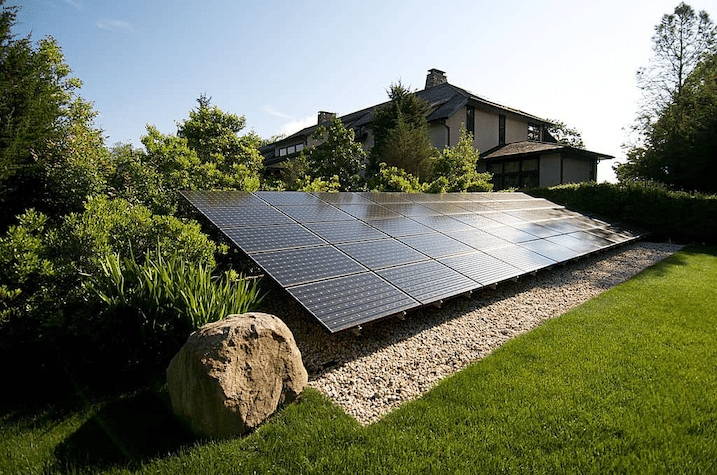
When Do Ground Mount Solar Panels Make Sense?
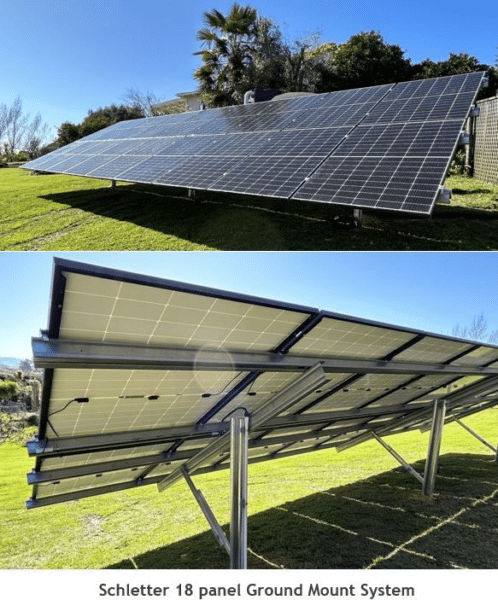
At PSC Energy, we’re proud to offer ground mount solutions by our good friends at Schletter. Schletter is the solar mounting system manufacturer that we use for our rooftop solar systems.
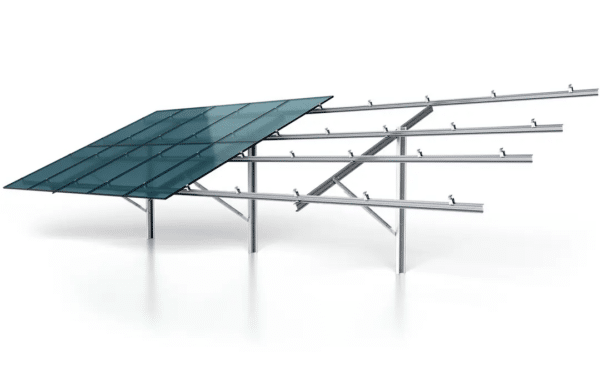
While they offer great solutions for rooftop solar, they also specialise in ground mount solar. So, Schletter has an excellent solution for ground mount solar systems. It’s a single-post setup, it’s pretty quick to install, it’s aesthetically pleasing, and it has a 25-year warranty.
Ground mount solar systems are a good choice in the following situations:
- When your roof can’t handle the weight of a solar system.
- When your roof is shaded fully, or its angle isn’t quite right for solar.
- If you have extra land, a ground mount system could be a smart way to utilise that space.
- Some people even use these systems to cover a spot to park their car, so you get shade and solar power at the same time.
If you’re interested in learning a bit more about solar mounting systems, you might want to check out the following article titled, What is a Solar Mounting System?
Benefits of Ground Mount Solar Panels
Ground mount solar has several advantages.
The first is flexible placement.
- You can choose the best orientation for your panels.
- Position them north for maximum sunlight or split east and west to spread generation through the day.
Another advantage is making use of unusable land.
- Ground mounts are ideal for areas that can’t be used for other purposes, like flood-prone ground.
- This turns wasted land into a productive energy source.
Ground mount systems also scale with your property size.
- The system can be as large as your land allows.
- This makes it especially useful for rural properties with more available space.
They are easier to clean and maintain.
- The panels are closer to the ground and within reach.
- Easier access means you are more likely to clean them, which helps efficiency.
Finally, ground mounts allow extra design possibilities.
- You can add battery storage.
- Build awnings or shade structures.
- Pour slabs for additional uses or structures.
Ground mounts open creative options that rooftops don’t allow.
If you’re interested in learning a bit more about solar panels and energy systems, you might want to check out the following article titled, Are Solar Panels Worth It in NSW, Australia? A Price Breakdown for 2025.
Drawbacks of Ground Mount Solar Panels
While ground mount solar has many benefits, it also has downsides.
One of the main drawbacks is the visual impact.
- Ground mount solar panels can look bulky and out of place in a yard.
- Some people don’t like seeing a row of panels on their land.
- They can be sore on the eyes compared to sleek rooftop panels.
The cost for ground mount solar is high.
- Ground mount solar can also be more expensive than rooftop systems.
- Extra materials, equipment, and labour drive up the initial cost.
You might also have to deal with complicated residential regulations.
- Because ground mount solar is considered a structure, some councils require approval before you can install it.
- The process can involve multiple steps, including getting engineering approval.
Fortunately, we have our good friends at Schletter, who will handle the engineering for us and make sure the system is certified, with every nut and bolt properly installed so that it will withstand the test of time.
The installation process itself can also be disruptive.
- The land needs time to recover after the work is done.
- Digging holes and trenches can leave scars on the ground, and it may take a while for grass to grow back.
You won’t just click your fingers and see the land go back to normal. Ground mount solar can leave a mark on your property.
Ongoing maintenance is required.
- If grass or weeds are growing beneath your ground mount system, it needs to be mowed.
- You can’t let grass or weeds grow up through your ground mount solar system.
- Maintaining this can be a bit of a hassle for some homeowners.
Bonus Tip: is that if you have sheep or cattle, you can build a fence around your ground mount system and let the livestock keep the grass short for you.
If you’re interested in learning a bit more about how to save with solar, you might want to check out the following article titled, Self-Consumption: How to Increase Solar Energy Use.
Click here for solar solutions.
The Installation Process for Ground Mount Solar Panels
The installation process for ground mount solar involves several essential steps.
- First, the site is marked out. This is where the system will go, and it’s crucial to get it right.
- The next step is to dig holes in the ground for the posts that will support the panels.
- The posts are then set in concrete to ensure they are stable. This part of the process requires waiting for the concrete to harden, so it’s sturdy enough to support the panels.
- Once the posts are secure, the rest of the system is built. This involves attaching rails and panels to the posts. If you have battery storage, this is the time to wire it all up.
- Ground mount systems also require a trench to run cables from the panels to your home’s power supply. This trench is essential because it connects your solar power to the places where you need it most.
The entire process takes longer than installing a rooftop solar system. A small rooftop system can be completed in a day, but ground mount solar installations can take at least two days, sometimes more.
There’s more labour involved, and extra machinery like skid steers and scissor lifts are often needed. All of this adds to the time and cost of getting your ground mount solar up and running.
If you’re interested in learning a bit more about what challenges might extend your installation, you might want to check out the following article titled, How Long Will My Solar Install Take?
Costs of Ground Mount Solar Panels
Ground mount solar systems are usually more expensive than rooftop systems. You’re looking at around $2.00 per watt, which includes both materials and labour.
With customers who have roof space available to use, we’re always going to recommend using the roof before you do a ground mount solar system. After all, the cost of land is worth more than the price of electricity in Australia.
That being said, if you have a large block of unused land, why not put it to work? Let’s look at the cost of ground mount solar.
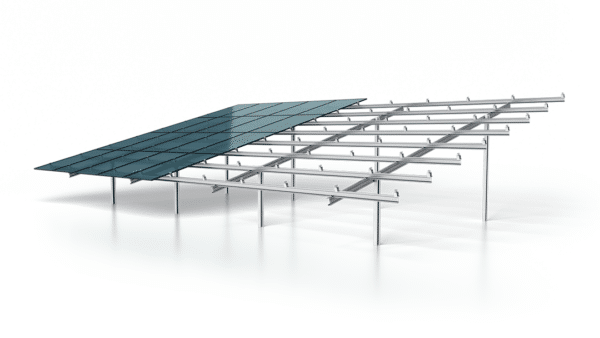
The extra costs stem from the additional components, such as posts, rails, and concrete, as well as the machinery required to set up the system.
For example, material costs can add about $0.30 per watt, while labour and equipment add another $0.70 per watt. We go to the site with a skid steer that needs a truck to deliver it and pick it up when the job is done. We also need to bring our scissor lift to build the ground mount once the mounting system is assembled.
These expenses add up for larger installations. Of course, the flip side of that is you will be destroying your energy bills with all the solar your system generates.
Ground mount solar makes the most sense when you have extra land and can’t use your roof. If your roof can handle solar panels, it’s usually cheaper and easier to stick with a rooftop system. But for those who want or need a ground mount, the higher initial investment will be worth it over time.
If you’re interested in learning a bit more about weighing the cost of solar against the cost of the grid, you might want to check out the following article titled, Cost of Solar Panels vs. Cost of Energy from the Grid.
Council Approval and Engineering Requirements for Ground Mount Solar Panels
One of the trickiest parts of installing ground mount solar can be getting council approval. Because ground mount systems are considered structures, many councils require a permit before you can start installation. This means checking with your local council and potentially submitting plans for review.
At PSC Energy, we work with Schletter, a trusted engineering partner. They make sure that every ground mount system is designed correctly and certified.
Our Schletter engineer evaluates each case and provides a scope of work that outlines the necessary tasks to meet engineering requirements.
For example, how much concrete per hole, how deep the holes need to be, and how many posts need to go in the ground per panel, as well. He also takes into consideration factors such as wind loading, the soil’s composition, consistency, and thickness, as well as the tilt and orientation of the solar panels.
Once it’s installed, the Schletter engineer will go to the site, have a good look at it, and sign off on the installation.
If you’re interested in the hidden costs of solar, you might want to check out the following article titled, Hidden Costs of Installing Solar: Switchboard Upgrades, Three-Phase Homes, Shade, and Meters.
Start saving with solar today!
Conclusion: Are Ground Mount Solar Panels Right for You?
Ground mount solar is a great option when rooftop solar isn’t possible. It works well when you have extra land, need more flexibility, or want to generate more power. The system has many benefits, like easier maintenance and creative design options. However, it also comes with drawbacks, including higher costs, visual impact, and the need for council approvals.
At PSC Energy, we work with our partner, Schletter, to make sure every system is reliable and safe. If you think ground mount solar might be right for your home, we can help you design a system that fits your needs and guides you through every step of the installation process.
If you’re interested in learning a bit more about AIKO solar panels, you might want to check out the following article titled, Ultimate Guide to AIKO Solar Panels for Australia 2025.
FAQ: Ground Mount Solar Systems
What is a ground mount solar system?
A ground mount solar system places panels on a frame in your yard or paddock instead of on your roof. It suits homes with tricky roofs or spare land.
When does ground mount solar make sense?
It makes sense when the roof cannot handle the weight, is badly shaded, has the wrong angle, or when you have open land you want to put to work.
Who supplies the mounting gear PSC Energy uses for ground mount solar systems?
PSC uses Schletter ground mount solutions. The system is a single-post design, installs quickly, looks tidy, and carries a 25-year warranty.
Can I choose the direction my ground mount faces?
Yes. You can point the array north for maximum yearly output or split panels east and west to match morning and afternoon use.
Can I use ground mount solar panels on land I cannot build on?
Yes. Flood-prone or unused land can host a ground mount system and become a power source for your home.
Can a ground mount solar panels be larger than a roof system?
Often yes. If you have the space, you can size the array to your goals and generate more power than a typical rooftop system.
Is cleaning and maintenance easier on a ground mount solar panel systems?
Yes. Panels are within reach, so you are more likely to keep them clean, which helps them stay efficient.
Can I combine ground mount solar panel systems with other structures?
Yes. You can add battery storage, build awnings, or pour slabs. Some people use the frame to create shaded parking.
What are the drawbacks of ground mount solar energy systems?
Visual impact, higher upfront cost, council approvals, engineering steps, site disturbance during works, and ongoing grass control under the array.
Why does a ground mount cost more than rooftop solar panel systems?
You pay for extra materials and labour. Posts, rails, concrete, trenching, and machines like skid steers and scissor lifts add time and cost.
How much does ground mount solar cost per watt?
A typical ground mount is around $2.00 per watt installed. Materials can add about $0.30 per watt and labour and equipment about $0.70 per watt within that figure.
What engineering is required for a ground mount solar panel systems?
Schletter engineers size the system and certify it. They specify hole depth, concrete volume, number of posts per panel, tilt, and orientation based on wind and soil.
How long does a ground mount solar panel installation take?
Longer than a small rooftop job. Expect at least two days and sometimes more, depending on size, access, and weather.
Can ground mount solar panel systems work with batteries?
Yes. You can add a battery now or later. Ground mount solar and storage pair well for higher self-consumption and backup power.