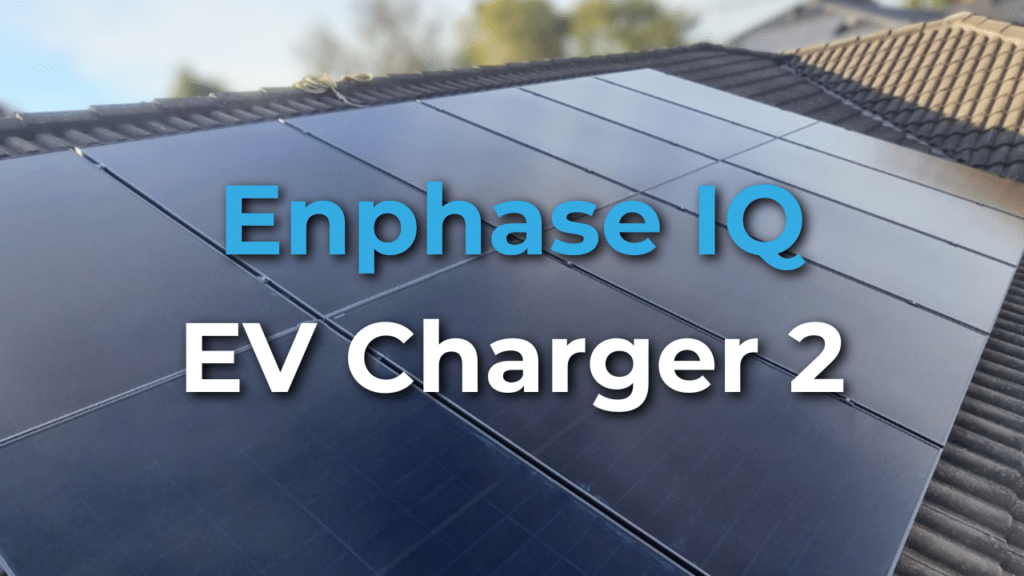
Home EV charging looks simple: a box mounts on a wall, and a cable connects to your car.
But your home can only supply so much power, and your car can only charge so fast. Your daily schedule also matters. If a charger doesn’t fit all three, it can quickly become frustrating.
The Enphase IQ EV Charger 2 is a good fit for everyday needs. It works well as a premium wall charger from the start. If your setup lets it connect with your solar and home energy use, it becomes even smarter within the Enphase system.
At PSC Energy, we understand you want a high-quality charger that helps you save on energy. The IQ EV Charger 2 is a great choice for many Australian homeowners, especially if you already use the Enphase energy system.
In this article, you’ll learn about the following:
- Enphase IQ EV Charger 2 in Summary
- What Is the Enphase IQ EV Charger 2?
- How Fast Will the Enphase IQ EV Charger 2 Charge My EV at Home?
- What Is the Difference Between Single-Phase and Three-Phase Power for EV Charging?
- What Makes the Enphase IQ EV Charger 2 Different from Other Home EV Chargers?
- What Is Dynamic Load Balancing for an EV Charger?
- How Can I Track EV Charging at Home?
- What Is the Most Common Mistake People Make When Buying an EV Charger?
- Who Is the Enphase IQ EV Charger 2 Best For?
- Pros and Cons of the Enphase IQ EV Charger 2
- FAQ: Enphase IQ EV Charger 2
By the end of this article, you will understand what the Enphase IQ EV Charger 2 does, who it suits, and what you need on site to unlock its smarter features. Let’s begin by looking at the charger’s main benefits at a glance.
Enphase IQ EV Charger 2 in Summary
The Enphase IQ EV Charger 2 works for many homes because it handles the basics well and lets you add smart features depending on your solar system.
Here is what it does in practical terms.
- It supports single-phase charging up to about 7.4 kW.
- It supports three-phase charging up to about 22 kW.
- It comes tethered with a long cable, so you do not need to bring your own lead, and you get more reach in the driveway or garage.
- It can charge from surplus solar and adjust the charge rate smoothly in the right solar system.
- It supports modern standards and software features that can help it stay compatible over time.
The charger shows its smartest features when installed as part of the Enphase energy system.
If you have Enphase microinverters, the charger can adjust to your solar production and home energy use. With other systems, it still works well as a smart charger.
What Is the Enphase IQ EV Charger 2?
The IQ EV Charger 2 is a fixed wall charger for AC charging at home.
- AC charging means the charger sends AC power to your car.
- Your car then converts that AC power into DC power inside the vehicle.
- Your car stores that DC energy in the car battery.
The charger uses a Type 2 connector, the most commonly used in Australia. Enphase supplies it as a tethered unit, so the cable stays attached to the charger. The cable length is 7.5 metres.
Cable length matters more than people realise.
- A longer cable gives you more freedom in mounting and parking positions.
- It also helps in shared driveways or tight garages.
A short cable can make daily charging a hassle.
Enphase gives the charger an IP55 rating, so it can be installed indoors or outdoors. Placement is still important, and a shaded area is best.
How Fast Will the Enphase IQ EV Charger 2 Charge My EV at Home?
Home charging has one main job: replace the energy you used while driving.
Many people focus on the highest kW rating but often regret choosing a charger just for that reason.
Charging speed depends on three limits, and each limit matters.
- Your home supply limit.
- The charger’s power rating.
- Your EV’s maximum charging rate.
The EV’s charging limit is what surprises most buyers.
A 22 kW charger does not force a car to charge at 22 kW. Your EV decides how much AC power it accepts.
Many EVs cap at 11 kW on three-phase AC. Some models cap lower. A 22 kW charger still works on those cars, but the car will not pull more than its onboard AC hardware allows.
A simple approach and a little TLC from your installer can help you avoid problems.
- Match the charger to your home supply.
- Check your EV’s maximum AC charge rate.
- Use your overnight parking window as your main charging strategy.
If you’re interested in learning a bit more about charging EVs, you might want to check out the following article titled, How Much Solar (and Battery) Do You Need to Charge an EV in Australia?
What Is the Difference Between Single-Phase and Three-Phase Power for EV Charging?
Many Australian homes use single-phase power, while larger homes and new builds use three-phase.
This affects the speeds and options available for home charging.
Most home charging sits in these buckets.
- Single-phase typically delivers about 7 kW.
- Three-phase often delivers around 11 kW or up to about 22 kW.
The IQ EV Charger 2 supports both types. Your installer or electrician sets it up to match your home supply and needs.
Single-phase suits regular commuting with one EV charging overnight.
Consider upgrading to three-phase if you drive a lot, need fast charging between trips, or may add a second EV.
Remember, your EV always sets the maximum charge speed, even with three-phase power.
If you’re interested in learning a bit more about single-phase and three-phase sites, you might want to check out the following article titled, Single-Phase vs. Three-Phase: How Are They Different?
What Makes the Enphase IQ EV Charger 2 Different from Other Home EV Chargers?
Many chargers deliver power. Fewer chargers manage power well.
This charger is a good choice if you care about daily results, not just technical specifications.
- You want the EV to soak up spare solar during the day.
- You want a smooth adjustment instead of a jumpy on-and-off behaviour.
- You want to avoid problems with your switchboard when your home’s power use goes up.
- You want clear tracking and control in one place.
These results depend on how you set up the charger and the equipment around it. The charger is just one part of a larger system that can work with your solar on the roof.
Solar smart charging only works when the charger has real-time information about your solar generation and your home energy use. This integration requires the charger to be connected to devices that measure your home’s electricity import and export.
That device is the IQ Gateway. You’ll need one of those, and they cost a little extra to install. This device allows your IQ Charger to talk with different solar systems, not just Enphase.
It can also detect grid outages when installed with a battery and switches to solar charging automatically.
A smart solar charging setup usually measures import and export at the switchboard.
Import means your home pulls power from the grid. Export means your home sends power back to the grid.
When the charger accesses import and export data, it can identify when your solar system produces excess power and adjust charging to use that surplus. This ensures optimal solar use and helps reduce reliance on grid power.
- The charger can increase charging when exports rise.
- The charger can reduce charging when the home starts importing from the grid.
When this works well, charging becomes simple. You don’t have to keep changing settings or check the app all the time. The system handles it for you.
What Is Dynamic Load Balancing for an EV Charger?
Load balancing fixes a common issue that can cause problems with many installations.
Your home’s electrical system has a limit. The main supply and switchboard can only provide so much power at once. Adding a charger is like adding another large appliance that runs for hours.
Dynamic load balancing helps the charger share power with the rest of the house.
A simple example shows the benefit.
- Someone starts cooking and runs the air conditioner.
- The home load rises fast.
- The charger backs off.
- The main switch stays on.
- Everything in the house keeps running smoothly.
Load balancing can help prevent power interruptions and may let some homes avoid expensive electrical upgrades.
However, it does not fix every situation. If your switchboard is crowded or your wiring is unsafe, those issues still need to be addressed.
If you’re interested in learning a bit more about public charging stations, you might want to check out the following article titled, Electric Vehicle (EV) Charging Guide 2026.
What Is the Most Common Mistake People Make When Buying an EV Charger?
This step is even more important than which charger you choose.
Many homeowners buy a ‘smart solar charger’ but install it as a basic charger. As a result, it only works as a basic charger, which can lead to confusion and disappointment.
You can avoid that regret by separating the two installation paths in your mind.
Path 1: Charger-only setup
This path gives you reliable charging with basic smart control.
You can expect outcomes like these.
- The charger runs at a set power level.
- The charger follows schedules through the app.
- The charger gives simple monitoring and control.
You should not expect the charger to automatically chase solar surplus unless the site setup gives it import and export data.
Path 2: Integrated smart setup
This path gives you the features people mean when they say, “smart solar charging.”
The charger can act smarter because it can see what the home and solar system are doing. That visibility usually comes through the right Enphase system components (IQ Gateway) on site.
You can expect outcomes like these.
- Better surplus solar charging behaviour.
- Smoother charge rate changes through the day.
- Load balancing support during peak home load.
- More routines that you can set once and let run automatically.
What Questions Should I Ask Before Buying an EV Charger For My Home?
Asking about these points before you decide can help you avoid regret.
Home supply and EV limits
- You confirm whether your home has single-phase or three-phase power.
- You check your EV’s maximum AC charge rate.
- You confirm whether the EV can use 22 kW AC or whether it caps at 11 kW or lower.
Smart charging setup
- You confirm whether the charger will see import and export at the switchboard.
- You confirm what equipment enables that data link on your site.
- You confirm whether the installer will configure solar charging behaviour.
Load balancing
- You check whether the home hits high peak loads at night.
- You confirm whether load balancing is suitable for your house.
- You confirm whether the switchboard needs changes to support this cleanly.
Location and cable reach
- You choose the charger location based on how you park.
- You confirm the cable reaches comfortably without tension.
- You choose a location that avoids constant heat.
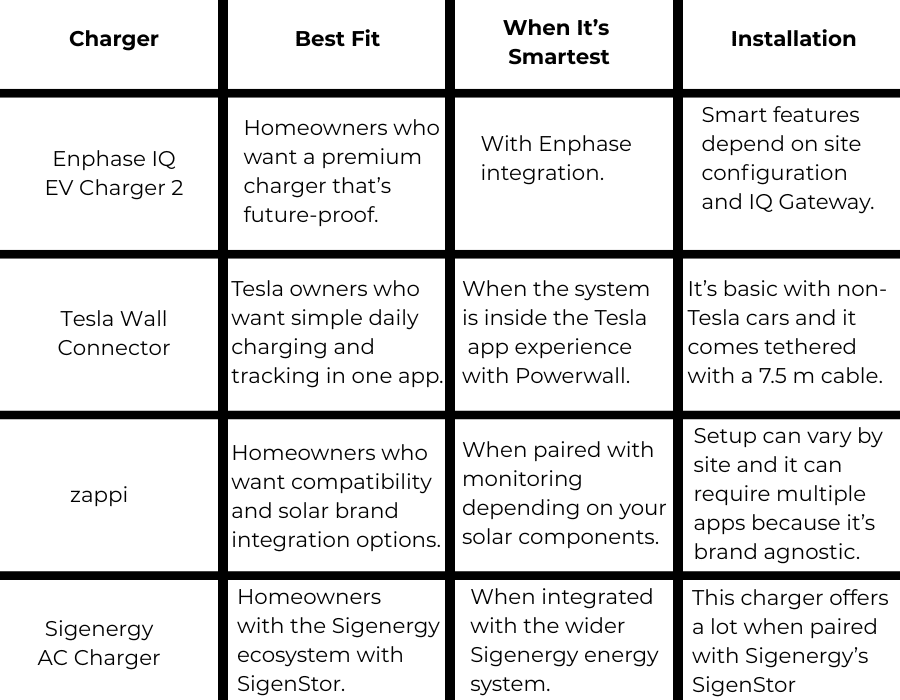
How Does the Enphase IQ EV Charger 2 Compare to Other Home EV Chargers?
This table is meant to give a general overview for homeowners. It does not rank the products.
Home charger installations may look simple online, but real installations depend on the details of your house.
These factors drive most of the outcome.
- Switchboard condition and space.
- Cable run distance from switchboard to charger location.
- Wall type and mounting location.
- Home supply type and main switch limits.
Outdoor installations work well in Australia, but the location is still important. IP ratings are useful but choosing the right spot matters even more.
How you handle the cable is important. Tethered cables last longer if you treat them gently. Avoid tightly coiling the cable, as this can cause wear. A good installation includes a sensible cable path and a proper place to hang the cable.
If you’re interested in learning a bit more about bidirectional EV charging, you might want to check out the following article titled, Bidirectional EV Charging in Australia Explained: Your Guide to V2G, V2H, and V2L.
Who Is the Enphase IQ EV Charger 2 Best For?
This charger fits best for a few clear homeowner profiles.
- The home already uses Enphase, and the owner wants one ecosystem.
- The EV parks at home during the day, and solar charging matters. This homeowner works or parks at home during daylight hours and wants the EV to soak up any surplus solar energy.
- The home has three-phase power, and the owner wants the option to charge the EV faster and wants an upgrade for a second EV later.
- The home hits high peak loads, and the homeowner runs air conditioning and cooking in the evening. This homeowner wants the charger to back off when the house load rises.
- The driveway needs extra reach. This homeowner parks to one side or at an angle. This homeowner values a long-tethered cable because daily charging feels easier.
Who should skip it:
This charger is not the right choice for everyone.
A buyer can skip it when they want the simplest possible job with no smart goals.
- The buyer only wants basic overnight charging and does not care about solar integration.
- The buyer has light charging needs and wants minimal features.
In these situations, a simpler charger can still work very well.
Pros and Cons of the Enphase IQ EV Charger 2
Pros
- One unit supports single-phase and three-phase charging.
- A long-tethered cable suits real driveways and garages.
- Outdoor-capable design suits common Australian installations.
- Solar-aware charging and load balancing work well with Enphase systems.
- Tracking and control work well with the Enphase ecosystem.
- Warranty coverage is 5 years and makes for a long-lasting home product.
Cons
- The best features depend on site setup and integration, so a basic install will not fully showcase their value.
- A higher kW rating does not guarantee faster charging, as the EV can cap AC input.
- “Future-ready” does not mean guaranteed bidirectional outcomes for every EV today.
If you’re interested in learning a bit more about bidirectional considerations, you might want to check out the following article titled, Solar Batteries vs. Electric Car Batteries: Which One Should Power My Home?
Wrapping Things Up: Stay Current, Drive Happy
A good EV charger should work reliably every day, fit your driveway, and match your home’s power supply and your car’s limits. Smart features are only valuable if they make daily charging easier.
The Enphase IQ EV Charger 2 can provide reliable, everyday performance. With the right setup, it can also offer advanced features like solar-aware charging and load balancing.
Taking one simple step can help you avoid common mistakes. Before buying or installing, check compatibility with PSC Energy. We’ll confirm your home’s power supply, your EV’s AC charging limit, and what’s needed for solar-aware charging. It’s what we do.
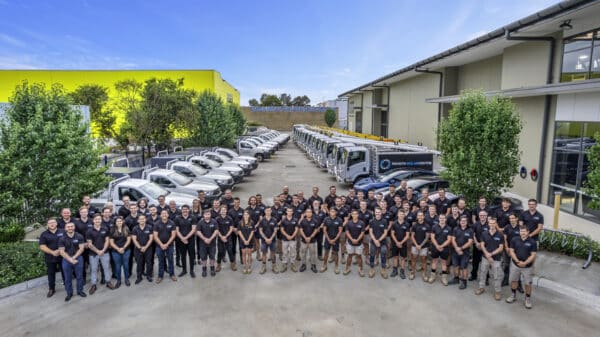
If you’re interested in learning a bit more about the importance of a good installer for your solar (the most important component of any system, seriously), you might want to check out the following article titled, In-house Installers vs. Subcontractors: Which is Better?
FAQ: Enphase IQ EV Charger 2
What is the Enphase IQ EV Charger 2?
It is a fixed wall charger for AC home charging, and it uses a Type 2 connector in Australia.
Can the Enphase IQ EV Charger 2 work on single-phase and three-phase homes?
It supports both, and a licensed electrician configures it to match the home supply.
How fast will Enphase IQ EV Charger 2 charge?
The charger can supply up to the configured limit, and the EV sets the real maximum AC speed.
Can Enphase IQ EV Charger 2 charge from surplus solar?
It can do that in the right setup. The charger needs the right site integration so it can see solar surplus and home load.
What does load balancing do?
It lets the charger reduce charging power when the home load rises.
Can an installer mount the Enphase IQ EV Charger 2 outside?
Enphase rates it for outdoor use, and good placement still matters for long life.
Should a buyer expect bidirectional charging in Australia right now?
A buyer should treat bidirectional as conditional. A buyer should check supported lists for the exact EV model and should treat future updates as a bonus.
Works Cited
Enphase Energy. IQ EV Charger 2. https://enphase.com/en-au/installers/ev-chargers
Enphase Energy. EV Chargers Documentation. https://enphase.com/en-au/installers/resources/documentation/ev-chargers
Enphase Energy. IQ EV Charger 2 for Homeowners. https://enphase.com/en-au/homeowners/ev-chargers
Enphase Energy Newsroom. Enphase Energy Launches Next Generation IQ EV Charger 2. https://newsroom.enphase.com/news-releases/news-release-details/enphase-energy-launches-next-generation-iq-ev-charger-2