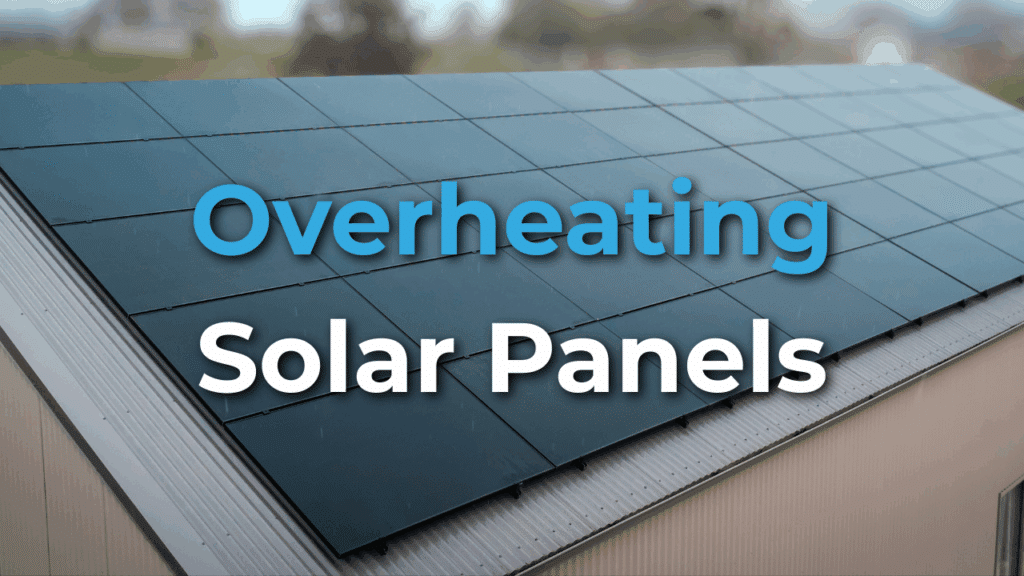
Summer temperatures in NSW can soar well above 35°C. Your roof can feel like a frying pan. It’s fair to ask, can solar panels overheat? If you’re thinking about installing a solar system or already have one, this question matters.
At PSC Energy, we’ve heard these questions before. We help homeowners across NSW make smart solar decisions. We know how Australia’s heat affects solar systems, and we want to clear up the confusion.
In this article, you’ll learn about the following:
- How Solar Panels Work
- Heat vs Light: What Powers a Solar Panel?
- What Happens If Solar Panels Overheat?
- Are Solar Panels Better in Heat?
- Are Solar Panels Still Worth It in Hot Regions?
- FAQ: Solar Panels and Heat
By the end of this article, you’ll know how solar panels react to extreme heat, what happens to their output, and how good system design can keep your panels working efficiently all summer.
How Solar Panels Work
Solar panels don’t turn heat into electricity. They turn sunlight into electricity. More specifically, they convert light energy into direct current (DC) electricity using something called the photovoltaic effect.
Each panel is made of many small solar cells. These cells are usually made from silicon. When sunlight hits the cells, it knocks electrons loose inside the silicon. This movement of electrons creates an electric current.
This electricity flows through wires and moves to your inverter. The inverter converts DC power to alternating current (AC), which is the type of electricity your home uses.
It’s important to understand that solar panels work best when the sun is bright, not necessarily when it’s hot.
In fact, heat can lower their performance.
If you’re interested in learning more about solar systems, you might want to check out our introductory article titled, New to Solar: Start Here.
Heat vs Light: What Powers a Solar Panel?
It’s easy to assume that hotter days mean more solar power. After all, more sun usually means more heat.
But solar panels don’t work that way. They need sunlight, not heat. In fact, as temperatures rise, solar panel performance declines.
This is because solar panels are electronic devices. Just like your phone or laptop, they don’t like getting too hot. The key thing to understand is something called the temperature coefficient.
The temperature coefficient tells you how much a panel’s efficiency drops for every degree above 25°C. This is the standard testing temperature for solar panels.
Most panels have a temperature coefficient between -0.3% and -0.5% per °C.
Let’s say your panel has a temperature coefficient of -0.4%. That means for every degree over 25°C, your panel will lose 0.4% of its power output.
On a 40°C day, the panel’s temperature might climb to 65°C or higher. That’s 40 degrees above the test temperature, which could reduce its efficiency by up to 16%. Their dark colour absorbs heat as effectively as sunlight.
Even on hot days, when there’s plenty of sunlight, the heat makes it harder for your panels to convert that light into electricity. This is why solar panels tend to perform better in cool, sunny weather.
If you’re interested in learning a bit more about how to save with solar, you might want to check out the following article titled, Self-Consumption: How to Increase Solar Energy Use.
What Happens If Solar Panels Overheat?
The word “overheat” might make you think of damage or failure. But for solar panels, overheating means loss of efficiency, not total breakdown.
Panels are designed to handle high surface temperatures. They won’t melt or catch fire under normal Australian conditions. However, when they get too hot, they can’t produce power as efficiently.
Heat also puts additional stress on other parts of your system, such as the inverter. That’s why it’s essential to choose quality equipment and proper installation.
If your solar system is well designed, it will keep working through NSW heatwaves. You might see a slight drop in output during the hottest part of the day, but your panels will keep producing.
Good installers in NSW know how to design solar systems for hot weather. They plan the setup to allow airflow around the panels. Airflow helps cool the panels and reduces heat build-up.
They also consider roof angle and orientation. Mounting systems that lift panels slightly off the roof help.
Installers also consider local weather data. If your area regularly hits high temperatures, they might recommend panels with lower temperature coefficients.
If you’re interested in learning a bit more about solar panels and energy systems, you might want to check out the following article titled, Are Solar Panels Worth It in NSW, Australia? A Price Breakdown for 2025.
Are Solar Panels Better in Heat?
Yes. Some solar panels perform better in high temperatures than others. You can find this information in the panel’s datasheet, where it lists the temperature coefficient.
For example, panels like the SunPower Maxeon 6 and REC Alpha Pure have temperature coefficients around -0.29% per °C, which is lower than average. This means they lose less power on hot days. These panels are also known for their durability and high output, even in harsh conditions.
AIKO all black solar panels, which we install on our customers’ homes, have a temperature coefficient of -0.26% per °C. This is an industry-leading feature of AIKO panels.
Monocrystalline panels usually handle heat better than polycrystalline panels. Most top-tier brands now use monocrystalline technology because it’s more efficient and more stable under stress.
Always check the panel specs before you buy and ask your installer why they’re recommending a particular brand. If they can’t explain it clearly, it might be time to look elsewhere.
If you’re interested in learning a bit more about VPPs, you might want to check out the following article titled, Should You Join a VPP? A Guide for NSW, Australia, 2025.
Are Solar Panels Still Worth It in Hot Regions?
Yes, solar is still absolutely worth it in NSW, even with high temperatures.
Here’s why:
Most of your energy usage happens during the day, especially when it’s hot and the air conditioner is running. That’s also when your panels are producing power.
Even with a slight drop in efficiency, your system will still reduce your electricity bills. Over the course of a year, NSW has enough sunshine to make solar one of the best home upgrades available.
Smart system design, panel choice, and airflow planning can reduce heat-related losses. Pick a reliable installer who understands local conditions. You can get great results even in the middle of summer.
Before you sign a contract, ask your installer these key questions:
- What is the temperature coefficient of the panels you’re recommending?
- How will the system design help with heat management?
- Do you factor in local temperature data when planning systems?
- Are the panels tested to handle high temperatures?
- Will the inverter perform well in extreme heat?
These questions will help you avoid cheap systems that underperform when the weather heats up. They’ll also show your installer that you’ve done your homework.
If you’re interested in learning a bit more about solar panel efficiencies, you might want to check out the following article titled, How Efficient Are Solar Panels? Shade, Heat, and Seasonal Considerations in NSW, Australia.
More chill, smaller bill. Thank a low temperature coefficient.
Hot weather doesn’t ruin solar panels, but it can affect how well they work. The good news is that the drop in performance is easy to manage with the right system design, quality panels, and smart installation.
At PSC Energy, we help NSW homeowners install systems built for Australian conditions. We choose high-performing panels and design each system to handle both sun and heat.
If you’re considering going solar and want to make sure your system performs well year-round, we can help. It’s what we do.
If you’re interested in learning a bit more about solar and battery rebates in NSW, Australia, you might want to check out the following article titled, Ultimate Guide to Australia’s 2025 Solar Rebate and Battery Rebate: Federal and NSW Rebate for Solar.
FAQ: Solar Panels and Heat
Can solar panels overheat in Australia?
Yes. In Australia’s summer heat, panels can get very hot and lose efficiency. Overheating means reduced output, not melting or failure. Well-designed systems keep working through heatwaves in NSW.
Does heat or light power a solar panel?
Light powers a solar panel. Heat does not. Panels turn sunlight into electricity using the photovoltaic effect. More heat usually lowers performance even when the sun is bright.
How does heat reduce solar panel output?
Every panel has a temperature coefficient. It shows how much power the panel loses for each degree above 25°C. Most panels lose about 0.3% to 0.5% per °C. Hotter panels make less power.
What is a temperature coefficient, and why does it matter in NSW?
The temperature coefficient is a rating on the datasheet. It shows how quickly output drops as temperature rises. In NSW summers, roof temperatures climb fast, so a lower (less negative) coefficient protects more of your production.
How hot can solar panels get on a 40°C day?
On a 40°C day, a panel surface can hit 65°C or higher. With a −0.4%/°C coefficient, that can mean around 16% power loss compared to the 25°C test condition.
Do hot days damage solar panels?
Not under normal conditions. Quality panels are built to tolerate high surface temperatures. Heat lowers efficiency, but it does not melt panels or cause fires in a correctly installed system.
Can heat affect other parts of my solar panel system?
Yes. Inverters and other electronics also feel heat stress. Proper placement, clear airflow, and quality gear help keep them within safe operating limits.
Which solar panels perform best in hot weather?
Panels with lower temperature coefficients perform better. Examples include SunPower Maxeon 6 and REC Alpha Pure at about −0.29%/°C. Monocrystalline panels usually handle heat better than polycrystalline panels.
How can installers reduce overheating on my roof?
Good design improves airflow under the panels. Installers use racking that lifts panels off the roof, set tilt for ventilation, and choose layouts that avoid heat traps. They also size and place inverters to manage heat.
What roof factors affect solar panel temperatures?
Roof colour, material, height above the roof, and airflow matter. Dark, low-vent roofs run hotter. A mounting that allows a clear gap beneath the panels helps heat escape.
Will solar panels still pay off in hot regions like NSW?
Yes. Most energy use happens when the sun is out and air conditioners run. Even with some heat losses, well-designed systems in NSW still deliver strong annual savings.
What should I ask my solar panel installer about heat management?
Ask these:
- What is the panel temperature coefficient?
- How will mounting and tilt improve airflow?
- Where will the inverter go to avoid heat?
- Do you use local weather data in your design?
- Are the components rated for high temperatures?
How do I read a datasheet for heat performance?
Look for the “Pmax temperature coefficient” (often written as %/°C). Closer to zero is better. Also, review the operating temperature range and any ventilation guidance from the manufacturer.
Will adding more solar panels fix heat losses?
Not directly. Adding more panels increases capacity, but heat losses still apply. Focus first on panel selection, airflow, racking, and inverter placement. Then size the array for your goals.
Do microinverters or string inverters handle heat better?
Both need cooling. Microinverters sit behind panels and benefit from good airflow under the array. String inverters need shaded, ventilated locations. A quality installer will plan for either to stay within spec on hot days.
Should I clean solar panels more often in summer?
Keep panels clear of heavy dirt or dust for the best output. Clean safely when panels are cool. Heat itself reduces efficiency, but dirt adds extra loss you can avoid.
What signs show my solar panel system is heat-limited?
You may see strong morning output that tapers earlier than expected on very hot afternoons, even with clear skies. Your monitoring app will show output dipping as panel temperatures rise.
Can better racking or spacing help?
Yes. Racking that increases the gap under panels improves convection cooling. Even small increases in airflow can recover a few percentage points of output on hot days.
Is shading ever helpful for heat?
No. Shading lowers light and slashes output. Aim for full sun with good ventilation rather than any shade.