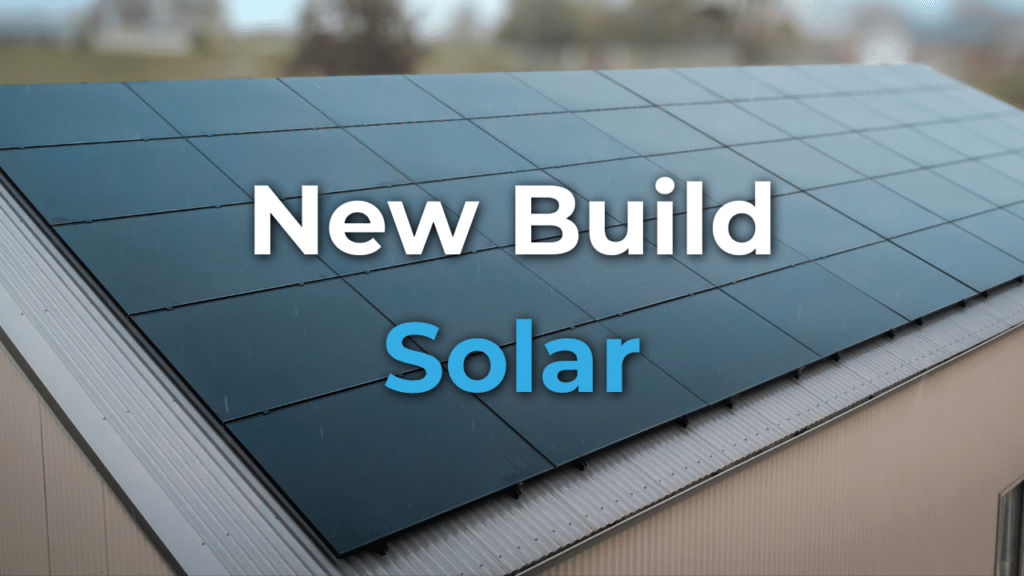
If you’re building a new home, you might decide to think about solar later. That’s understandable. With so many decisions to make before the roof goes on, solar often feels less urgent.
But here’s the catch: by the time you start thinking about solar, key decisions might already be made. Builders often choose the system, installer, and size before most homeowners realise it’s even an option to discuss.
At PSC Energy, we hear from many new build customers. Often, people reach out after moving in, confused about the small solar system on their roof or frustrated that they couldn’t pick their own installer once construction started. This is a common issue.
In this article, you’ll find out:
- Can You Choose Your Own Solar Installer for a New Build?
- Why Do Builders Bundle Solar Into the Build Contract?
- Is BASIX Solar Required for New Homes in NSW?
- Why New Build Solar Systems Are Often So Small
- What You Can Still Do (and What You May Have Already Lost)
- FAQ: Builder Solar and New Build Solar Questions Answered
By the end of this article, you’ll know if builder solar is really required, why many new homes have small systems, and how to keep your options open before you sign a contract.
Can You Choose Your Own Solar Installer for a New Build?
Sometimes you can, but it mostly depends on timing.
Builders often include solar in the build contract, just like flooring, appliances, and lighting. Once you sign, the builder controls the site, the trades, and what’s included.
If you want to use your own solar installer later, you’ll probably need to change the contract, which can take more time and cost extra. Some builders don’t allow outside trades on site during construction because of scheduling, liability, and warranty concerns.
Before you sign, you usually have a chance to negotiate. Most builders are open to discussing solar if you bring it up early.
Before signing your build contract, you may be able to:
- Remove solar from the contract entirely and arrange your own installer separately.
- Negotiate for different equipment, such as better-quality panels or a different inverter type.
- Ask for prewiring that makes future upgrades like batteries or EV chargers simpler and cheaper.
- Organise your own solar company to complete the installation during the build.
After you sign, these options often disappear quickly. What seems like a simple change can end up costing more or delaying your build by weeks.
There’s no law that says you must use your builder’s solar installer. But once construction begins, the builder controls what happens on site. Many people only learn this when it’s already too late.
If you’re interested in learning more about why you should rough-in solar during construction, you might want to check out the following article titled, Why You Should Rough-In Solar During Construction.
Why Do Builders Bundle Solar Into the Build Contract?
Some people think builders add solar just to make extra profit. That can be true, but there’s also a practical side.
Builders want to finish your home on time, pass inspections, and avoid delays. Solar affects the roof, electrical work, paperwork, and final approvals. Using an installer they know and a standard system makes things simpler and more predictable for them.
The problem is that Builder Solar is set up to finish the home, not to match how you’ll use energy after you move in. Builders aren’t solar experts. Many just use subcontractors they know and may not ask the right questions about your needs.
That’s why homeowners often end up with systems that work, but don’t really fit their needs.
Is BASIX Solar Required for New Homes in NSW?
This is where things can get confusing, so it’s important to be clear.
New homes in NSW must meet energy efficiency targets under BASIX, the Building Sustainability Index. Across Australia, new homes must comply, which sets performance standards for each state.
Here’s what most builders don’t explain clearly: solar panels aren’t always legally required. The home just needs to meet an energy efficiency score.
Solar is often the easiest and cheapest way for builders to reach that score, but it’s not the only option. Other ways to meet the standard include:
- Better wall and ceiling insulation.
- Double-glazed windows.
- High-efficiency heating and cooling systems.
- Upgraded hot water systems, such as heat pumps.
So when a builder says “solar is required,” they usually mean “this design needs solar to meet the target.”
That’s not the same as a legal requirement. Knowing this gives you more room to negotiate than you might expect.
If you’re interested in learning a bit more about planning solar for a new build, you might want to check out the following article titled, How to Plan Solar for a New Home Build in Sydney.
Why New Build Solar Systems Are Often So Small
Once you understand how BASIX solar compliance works, it’s easier to see why new build systems are often small.
If the main goal of the solar system is just to help the home pass its energy rating, the builder’s focus is on meeting the standard as cheaply as possible.
A 3kW system might be enough for compliance, but it may not suit a family of four with an EV charger, pool pump, or plans for a battery. Most builders don’t think about these needs.
The problems can show up quickly:
- This can cause issues right away: you end up buying most of your electricity from the grid, even though you have solar on the roof.
- Expanding the system later can be harder than it seems, because the inverter may not support extra panels.
- Decisions about the roof layout during construction may not leave enough space for expansion.
- You might end up paying twice: first for the compliance system, then again for the upgrade that actually fits your needs.
We’ve seen this happen many times. A customer moves into their new home, notices their power bills haven’t changed much, and calls us to find out why. Most of the time, the answer comes down to the size of the system the builder chose.
If you want to learn a bit more about the importance of roof restoration and solar, you might want to check out the following article titled, Roof Restoration and Solar Panels: Guide for Western Sydney.
What You Can Still Do (and What You May Have Already Lost)
If you haven’t signed your build contract yet, you’re in a strong position. Make the most of it.
Here’s what to do before you sign:
- Ask your builder what solar system is included, what brand, what size, and why that system was chosen.
- Find out whether the home’s energy rating depends on solar or whether other design choices could hit the target.
- Ask how future upgrades, like a battery or EV charger, have been accounted for in the design.
- Get a quote from an independent solar installer, so you have something to compare.
- Ask whether you can remove solar from the contract and handle it as a separate arrangement.
If you’ve already signed, your options are more limited, but you still have some:
- Ask your builder whether you can still make changes to the solar spec before construction begins.
- Ask to speak directly with the solar subcontractor they plan to use, and ask them the same questions.
- Check whether the system size and brand are documented in the contract, and what flexibility exists around those specs.
- Ask who handles warranty claims after handover, because this is often unclear with builder solar arrangements.
If construction is already underway or finished, your best option is to find out exactly what system you have and plan from there. A good installer can check your current setup and explain what’s involved in upgrading.
Bottom Line: Lay the Right Foundation
Builder Solar isn’t always a bad thing. Some builders use good installers and include systems that really fit the home. But many new builds end up with small, compliance-only systems that don’t match how people actually live.
The most important thing to remember is that timing matters. Before you sign a build contract, you have real choices. After you sign, those options disappear quickly. By the time you move in, most key decisions are already made.
At PSC Energy, we help new build customers from the planning stage, not just after the roof is finished. We can review your builder’s proposal, help you know what questions to ask, and show you what a system designed for your real needs could look like. It’s what we do.
If you’re interested in learning a bit more about planning solar for a new build, you might want to check out the following article titled, Questions to Ask Your Builder Before They Install Solar on Your Roof.
FAQ: Builder Solar and New Build Solar Questions Answered
Do I have to accept builder solar on my new home?
No, you don’t have to use your builder’s solar installer by law. But after you sign the contract, making changes becomes harder and more expensive. The best time to negotiate is before you sign.
Is BASIX solar compulsory for new homes in NSW?
BASIX says new homes must meet an energy efficiency standard, but solar panels aren’t the only way to do this. Solar is often the easiest and cheapest option for builders, which is why it’s common. However, better insulation, windows, and appliances can also meet the requirements, depending on the home’s design.
Why is my new build solar system so small?
Most builder solar systems are sized just to meet compliance, not to match your real energy use at home. A 3kW system might pass the rating check but may not lower your electricity bills much.
Can I upgrade my new build solar system after I move in?
Sometimes you can, but it’s often more complicated than you might think. The inverter might not support more panels, and the roof layout might not allow easy expansion. You may need to replace parts instead of just adding to them. Get independent advice before assuming an upgrade will be simple or cheap.
What should I ask my builder about new build solar before I sign?
Ask what system is included, why it was chosen, whether solar is needed for compliance or just the easiest option, how future upgrades are planned, and who handles warranty claims after handover. If your builder can’t answer these clearly, that’s a red flag.