You’ve spent weeks researching, filling out quote forms, watching videos, and talking to solar companies. But when you ask how much off-grid solar really costs, no one gives you a clear answer.
PSC Energy doesn’t currently install off-grid solar systems, but we have in the past. We use the same hardware daily and understand exactly how the costs add up.
In this article, you’ll learn the following:
- The Short Answer: Off-Grid Solar Cost Starts Where Grid-Connected Solar Leaves Off
- What a Basic Off-Grid Solar System Includes
- The Generator: Where the Real Off-Grid Solar Cost Difference Lies
- What If You Already Own a Generator?
- When Your System Size Drives Up the Off-Grid Solar Cost
- Can You Get the Federal Battery Rebate on an Off-Grid Solar System?
- When Does Off-Grid Solar Cost Less Than Connecting to the Grid?
- FAQ: How Much Does Off-Grid Solar Cost?
By the end of this article, we’ll explain where your money goes, what affects the cost, and if you can still get the federal battery rebate when you go off-grid.
The Short Answer: Off-Grid Solar Cost Starts Where Grid-Connected Solar Leaves Off
If you’ve already looked into grid-connected solar and battery systems, you probably have a good idea of what the main components cost. Off-grid systems use many of the same parts.
The main components of a standard off-grid solar system are:
- Solar panels (same products as any solar system).
- A battery bank (same brands and products as grid-connected systems).
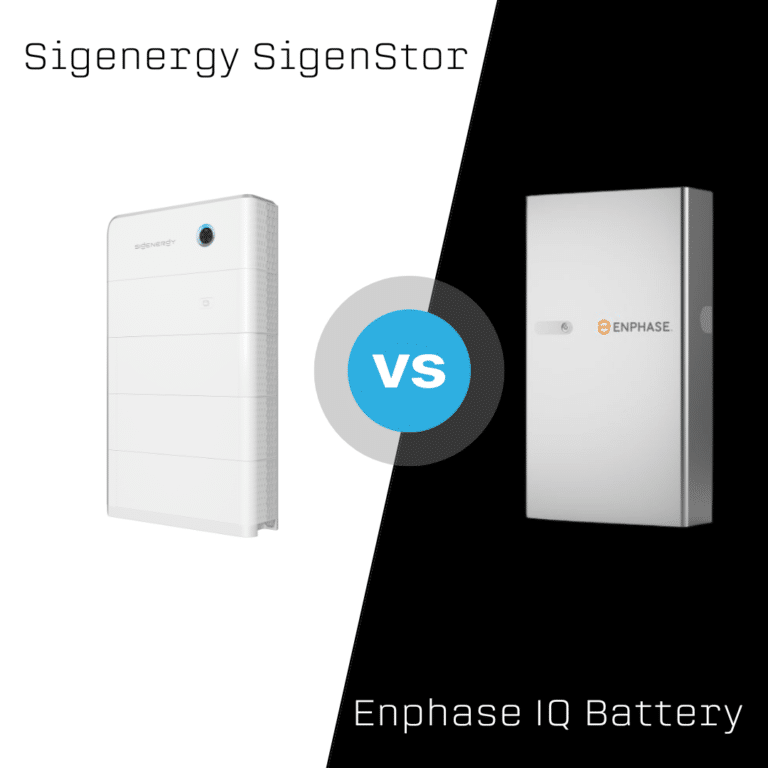
- An all-in-one inverter and controller, like the Sigenergy SigenStor, or a combination of a separate solar inverter, a battery controller, and a generator transfer switch.
The base system costs about the same as a grid-connected hybrid system. The main differences are the need for a generator and, sometimes, a larger gateway or controller for bigger energy needs.
If you’re interested in learning a bit more about working with a solar installer, you might want to check out the following article titled, Top Questions to Ask Your Solar Installer Before Hiring Them.
What a Basic Off-Grid Solar System Includes
A standard off-grid system uses almost the same hardware as a grid-connected solar and battery setup. The inverter controls the solar input, the battery stores energy, and the controller switches between solar, battery, and generator power.
All-in-one systems like the Sigenergy SigenStor manage solar input, battery storage, and home power in one unit with a single monitoring app. In contrast, multi-component setups use separate devices from different brands, each with its own app and alerts.
The Sigenergy SigenStor comes in 5 kWh and 8 kWh battery modules. A single unit supports up to 6 stacked modules, providing a maximum storage capacity of 48 kWh per unit.
What the base system does not include:
- A generator (that’s extra, covered below).
- Are any gateway or controller upgrades required for larger systems?
- A second battery stack if your storage needs exceed 48 kWh.
If you’re interested in learning a bit more about solar batteries and off-grid systems, you might want to check out the following article titled, What’s the Best Battery for Off-Grid Solar?
The Generator: Where the Real Off-Grid Solar Cost Difference Lies
The generator is what makes an off-grid system different from a grid-connected one. With grid-connected systems, the grid is your backup when solar and batteries aren’t enough. In off-grid setups, the generator takes over that job.
A well-installed off-grid system runs the generator automatically. When the battery drops to about 20-30%, the generator, on its own, recharges the batteries.
The cost of adding a generator is based on several factors:
- Generator size (measured in kVA).
- Whether the controller needs upgrading to handle the generator’s output.
- Site installation complexity.
Most off-grid homes in NSW use a generator between 5 and 15 kVA, with 8 to 10 kVA being ideal for most. Plan to spend about $3,000 to $8,000 for a properly sized and installed generator.
The controller, not your house size or peak energy use, determines the right generator size. If the generator is too big for the controller, it can cause damage.
If it’s too small, it will run all the time and won’t charge the batteries well. It’s important to get this right when designing your system.
If you’re interested in learning a bit more about off-grid systems, you might want to check out the following article titled, Do You Need a Generator with Off-Grid Solar?
What If You Already Own a Generator?
If you already have a generator on your property, you might not need to buy a new one. Many people in rural and semi-rural areas already have a generator in place.
Usually, connecting your existing generator to a new off-grid solar system is simple. The main steps are:
- Wiring the generator into the system.
- Confirming the generator’s output matches the controller’s maximum charge input.
- Setting up the automatic start and stop logic within the controller.
This can lower your off-grid costs a lot. If your generator is the right size and works well, your installer can connect it without needing to buy expensive new equipment.
When Your System Size Drives Up the Off-Grid Solar Cost
For most households, a single Sigenergy SigenStor with two or three 8 kWh modules comfortably covers daily energy needs. But some properties need more than 48 kWh of storage, and that’s where costs can jump.
Once you reach the 48 kWh limit of a single SigenStor unit, you need a second stack. A second stack adds more than just battery cost. It can also require:
- A larger gateway to manage the additional combined load.
- An upsized controller contactor to handle the larger generator output.
The more storage you need, the more you have to consider these extra parts. A good installer will include them in your quote from the start, so there are no surprises later.
Can You Get the Federal Battery Rebate on an Off-Grid Solar System?
Yes. Off-grid batteries are eligible for the same federal battery rebate as grid-connected systems. The same eligibility rules apply.
Under the Cheaper Home Batteries Program, the rebate currently works out to $238 per kWh for the first 14 kWh of battery capacity (based on an STC factor of 6.8). This applies to off-grid batteries the same way it applies to a standard home battery install.
Key things to know about the rebate for off-grid systems:
- The battery must be a CEC-approved product.
- The system must be installed by a CEC-accredited installer.
- The rebate is applied as an upfront discount on your quote, not a cash payment afterwards.
- NSW residents may also qualify for the VPP Incentive (up to $1,500), depending on the system and eligibility criteria.
- All other installation rules for the rebate are the same as a standard battery install.
The generator is the only component that differs in an off-grid setup, and it is not included in the rebate calculation. The battery rebate applies to the battery portion of the system, regardless of whether you’re connected to the grid.
If you’re interested in learning a bit more about off-grid systems and the solar battery rebate, you might want to check out the following article titled, Off-Grid Solar Panel Systems and the Federal Battery Rebate in Australia, 2026.
When Does Off-Grid Solar Cost Less Than Connecting to the Grid?
Going off-grid isn’t the best financial choice for everyone. For most suburban homeowners in NSW, a grid-connected solar and battery system is usually better value. If you already have cheap and easy access to the grid, going off-grid rarely makes sense.
Off-grid solar makes the most financial sense when:
- Grid connection to your property would cost tens of thousands of dollars (long cable runs, transformer installations, and connection fees can reach $30,000 or more in rural areas).
- Your property is genuinely remote, and a reliable grid connection isn’t available.
- Your energy load is large enough that a well-sized off-grid system is cost-competitive with the combined costs of ongoing electricity bills and the grid connection fee.
If you live on a semi-rural property with affordable and available grid connection, a grid-connected solar and battery system is almost always the smarter financial option. Off-grid systems cost more upfront and only make sense if connecting to the grid is very expensive.
Instead of asking, “Can I go off-grid?” it’s better to ask, “Will going off-grid cost less than connecting to the grid and using a battery system?” In rural areas, the answer is often yes. In suburban and semi-rural areas, it’s usually no.
Power to the People (Who Do the Math)
Now you know what actually drives the price of an off-grid solar system. The base hardware costs about the same as a grid-connected setup. The generator is where the real difference lives, and the size of that difference depends on what your system needs.
The most important number in your off-grid calculation isn’t the system price. It’s what a grid connection to your property would actually cost. In rural and remote areas, that comparison often makes the decision straightforward. In suburban areas, it usually points the other way.
PSC Energy works with homeowners and property owners across all of NSW, from Western Sydney out to regional and rural areas. Whether you’re weighing up an off-grid system against a grid connection quote, or you just want to understand your options properly, we can help you. It’s what we do.
If you’re interested in learning more about the changes to the federal battery rebate, you might want to check out the following article titled, Is the Federal Battery Rebate Still Available?
FAQ: How Much Does Off-Grid Solar Cost?
How much does off-grid solar cost in Australia?
The base system, panels, batteries, inverter, and controller, costs about the same as a grid-connected solar and battery setup. The main extra cost is the generator, which usually adds $3,000 to $8,000. If your property needs more than 48 kWh of storage, you’ll also need a second battery stack and possibly a bigger gateway and controller contactor, which can raise the total cost.
Is off-grid solar more expensive than regular solar?
The main hardware costs about the same. The price difference comes from the generator and any extra parts needed for larger systems, like a bigger gateway or upgraded controller contactor. If you already have a generator that fits your system, the cost difference is much smaller.
What size generator do I need for an off-grid solar system?
Most residential off-grid systems in NSW use a generator between 5 and 15 kVA. The sweet spot for a standard household is 8 to 10 kVA. The right size depends on the controller’s maximum charge input, not on the size of your home or your peak energy load. Your installer needs to match the generator to the controller, not the other way around.
Can I use my existing generator for an off-grid solar system?
Yes, in most cases. Your installer can connect your existing generator to the new system. The main thing is to check if your generator’s output matches the controller’s maximum input. If the generator is too big, the controller may need an upgrade. If it’s the right size, it’s mostly a matter of wiring and setup.
Are off-grid batteries eligible for the federal battery rebate?
Yes. Off-grid batteries are eligible for the same federal rebate as grid-connected batteries. The rebate currently works out to $238 per kWh for the first 14 kWh of capacity under the Cheaper Home Batteries Program. The same eligibility criteria and installation rules apply as a standard battery install.
When does going off-grid make financial sense?
Off-grid solar is usually best for rural and remote properties where connecting to the grid would cost tens of thousands of dollars. If grid connection is affordable and available, a grid-connected solar and battery system is usually the better financial choice.
What happens if my off-grid batteries run out?
If the batteries drop to about 20-30% charge, a properly installed system will start the generator automatically to recharge them. Without a generator, if the batteries run out during a long cloudy period, you’ll lose power until the sun comes back and the panels recharge the batteries.
Do I need a generator for an off-grid solar system?
No, a generator isn’t required by law. But without one, your batteries are your only backup. Most installers recommend having a generator because it’s much cheaper than buying enough batteries for four to six days without sun. The generator helps in rare cases of long bad weather, and a good system will run it automatically for you.